
When we talk about a player stats analysis, it means looking closely at how each player performs during a game. This includes passing, rushing, catching, tackling, and other key contributions. By studying these numbers, fans and analysts can understand who made a difference and how the game was won or lost.
This Steelers vs Ravens matchup was full of excitement and tension. Every player had a role, and small actions added up to big results. From the quarterbacks to the special teams, each moment mattered. Fans saw amazing passes, strong runs, and tough defensive plays that kept the score close until the end.
Looking at the stats, Pittsburgh’s Kenny Pickett showed great poise with two touchdown passes. T.J. Watt led the defense with sacks and tackles for loss. On the Ravens’ side, Lamar Jackson made plays with both his arm and legs, while Roquan Smith kept Baltimore in the fight with key tackles. These numbers tell the story of a hard-fought, thrilling game.
Quarterback Performances That Defined the Match
In every high-stakes NFL matchup, quarterbacks are under an intense microscope, and this clash between the Pittsburgh Steelers and Baltimore Ravens was no exception. Both teams relied heavily on their signal-callers to set the tone, and Kenny Pickett and Lamar Jackson rose to the occasion, each displaying moments of brilliance that kept fans on the edge of their seats.
Kenny Pickett showcased a level of composure and precision that has become his trademark this season. He completed 23 of 34 attempts for 254 yards, throwing two touchdown passes while being intercepted only once. Pickett’s pocket awareness stood out, especially during critical third-down situations. His decision-making in the red zone and on the game-winning drive reflected a maturity beyond his years, signaling that he is evolving into a true franchise quarterback.
On the other side, Lamar Jackson once again demonstrated his dual-threat capabilities, blending arm talent with athleticism. Jackson completed 21 of 30 passes for 240 yards, tossing one touchdown and also adding a rushing total of 64 yards. His ability to extend plays with his legs kept Pittsburgh’s defense constantly guessing. However, under heavy late-game pressure, Jackson committed a fumble and threw an interception, turning the momentum in Pittsburgh’s favor at a pivotal moment. These moments highlighted the fine margins that can determine the outcome of an NFL showdown.
Running Backs: Power and Precision on Display
In tightly contested games, the ground attack often becomes the unsung hero, and both teams leaned on their running backs to establish rhythm and control. For the Steelers, Najee Harris was a powerhouse, grinding out 92 rushing yards on 18 carries and finding the end zone for a crucial third-quarter touchdown. His consistent, punishing runs effectively wore down the Ravens’ defensive front, opening lanes for other playmakers to operate.
The Ravens leaned on Gus Edwards, who managed 76 yards on 15 attempts. While Edwards was efficient and helped maintain possession, the Ravens lacked explosive plays on the ground, which would have shifted momentum in their favor. The Steelers’ defensive front was disciplined, closing running lanes quickly and preventing any significant breakaway runs. Harris’ ability to consistently gain yardage under pressure showcased both his strength and vision, making him a key factor in Pittsburgh’s offensive strategy.
Wide Receiver Highlights and Key Contributions
Wide receivers often serve as the difference-makers in high-pressure games, and both teams had key players stepping up. For the Steelers, George Pickens was the undisputed star, hauling in 7 receptions for 118 yards and a touchdown. His speed, precise route-running, and reliable hands made him a matchup nightmare and created opportunities for the rest of the offense.
Diontae Johnson contributed 54 receiving yards on five catches, helping to stretch Baltimore’s secondary and providing Pickett with dependable options throughout the contest. The synergy between Pickens and Johnson forced defensive adjustments, allowing the Steelers to control the field both horizontally and vertically.
Baltimore’s standout receiver was Zay Flowers, who pulled in 6 catches for 84 yards. His quickness off the line and ability to find open space kept drives alive, though the Ravens were hampered by a few untimely dropped passes that stalled momentum. Despite his efforts, the lack of consistent execution from surrounding targets made it difficult for Jackson to sustain drives against Pittsburgh’s aggressive secondary.
Tight Ends and Their Silent but Crucial Impact
Tight ends often operate in the shadows of more glamorous positions, but their contributions can change the trajectory of a game. Pat Freiermuth was instrumental for the Steelers, catching 4 passes for 46 yards, including a key third-and-long conversion that extended a pivotal drive. His ability to secure tough catches in traffic and provide Pickett with a reliable safety valve made a tangible difference in Pittsburgh’s offensive efficiency.
For the Ravens, Mark Andrews was the focal point, recording 5 receptions for 58 yards. He remained a consistent target for Jackson, particularly over the middle of the field. However, Pittsburgh’s disciplined coverage in the red zone limited Andrews’ impact when it mattered most, preventing Baltimore from converting critical scoring opportunities. Both tight ends highlighted the importance of versatility and smart playmaking, proving that even “silent” contributions can be decisive.
Offensive Line Performance and Protection Stats
As is often said in football, games are won in the trenches. Pittsburgh’s offensive line excelled, allowing only two sacks and giving Pickett the time necessary to make precise throws. Their exceptional protection was instrumental in maintaining the offensive rhythm, particularly on crucial third downs and late-game drives.
Baltimore’s offensive line struggled to provide similar stability. Four sacks and nine quarterback pressures disrupted Jackson’s timing, forcing hurried throws and broken plays. The contrast in line play was a significant factor, as Pittsburgh’s unit allowed their young quarterback to operate confidently, while Baltimore’s line issues placed Jackson under constant duress. The game reinforced the old adage: protect your quarterback, and the rest will follow.
Steel Curtain: Defensive Standouts for Pittsburgh
Pittsburgh’s defense was reminiscent of the legendary “Steel Curtain” teams, combining relentless pressure with disciplined coverage. T.J. Watt was a disruptive force, recording 2.5 sacks, five tackles for loss, and a critical strip sack in the closing minutes that effectively sealed the victory. Watt’s ability to alter plays in both the backfield and downfield exemplified his elite defensive acumen.
Safety Minkah Fitzpatrick added seven tackles and a key interception, flipping the momentum in Pittsburgh’s favor. Alex Highsmith and Cole Holcomb also played pivotal roles, consistently pressuring Jackson and neutralizing potential big plays. The Steelers’ defense combined opportunism with discipline, ensuring that Baltimore’s offense faced continuous obstacles.
Ravens’ Defensive Resistance and Grit
Despite the loss, Baltimore’s defense demonstrated resilience and toughness. Roquan Smith led the unit with 12 tackles and forced a fumble, showing leadership and physicality that kept the Ravens competitive. Kyle Hamilton contributed with six solo tackles and a crucial pass breakup, though the defense as a whole struggled on third downs and in red-zone situations.
Allowing Pittsburgh to convert 7 of 13 third downs created immense pressure late in the game, ultimately tipping the scales in the Steelers’ favor. While individual performances stood out, the collective inability to execute consistently under high-stakes moments limited the Ravens’ defensive effectiveness.
Special Teams: Hidden Stats with Huge Impact
Special teams often fly under the radar, yet their influence on field position and scoring is undeniable. Chris Boswell was perfect, connecting on all three field goal attempts, including a pressure-filled 49-yard kick.
Meanwhile, Justin Tucker’s 51-yard attempt miss the first of the season proved pivotal, altering momentum and potentially changing the game’s outcome. Pittsburgh’s disciplined punting and coverage units controlled field position, subtly yet effectively giving their offense advantageous starting points.
Crucial Turnovers and Game-Changing Plays
Turnovers can define tight contests, and Pittsburgh won that battle. Baltimore committed two critical turnovers a Jackson interception and fumble which Pittsburgh capitalized on for points. Conversely, the Ravens failed to exploit Pickett’s lone interception.
The +1 turnover margin underscored the Steelers’ ability to convert opportunities into tangible results. Each takeaway shifted momentum, demonstrating how small margins can dictate the flow and final result of a high-level NFL game.
Third-Down Efficiency and Drive Sustainability
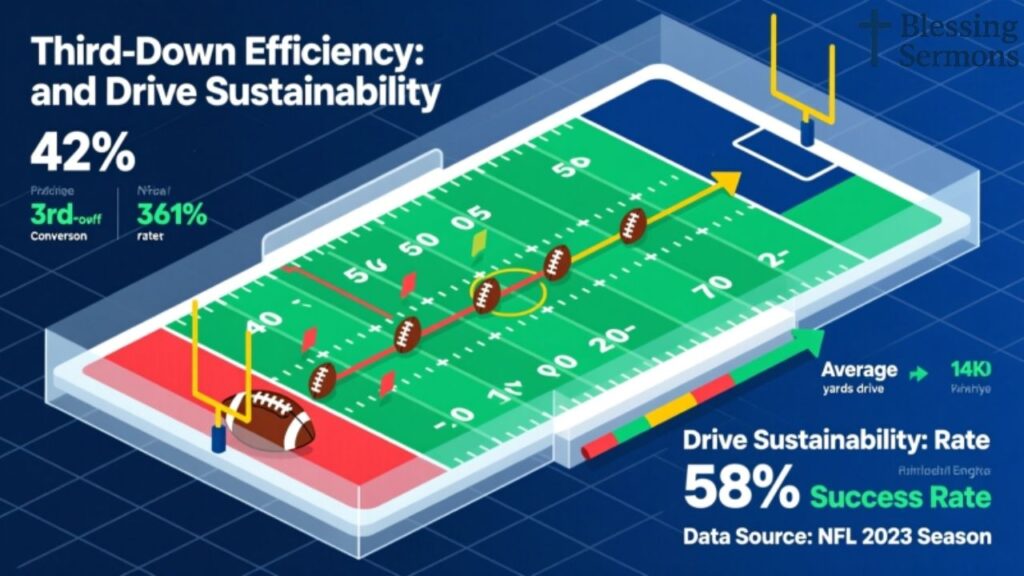
Controlling the clock and sustaining drives are critical in closely contested games. Pittsburgh converted 53% of third downs, consistently keeping drives alive and wearing down Baltimore’s defense. Short passes, screens, and well-timed play-calls enabled the Steelers to maintain offensive rhythm.
Baltimore managed only 36% on third-down conversions, stalling key drives and giving Pittsburgh additional opportunities to dominate possession. The contrast in efficiency illustrated how execution under pressure can separate winning teams from those falling short.
Red Zone Execution and Play Calling
Red-zone performance is often decisive in NFL outcomes. The Steelers converted three of four red-zone visits into points, blending strategic play-calling with precise execution.
Baltimore, however, reached the red zone three times but converted only once, hampered by conservative play calls and missed opportunities. Pittsburgh’s defensive front tightened inside the 20-yard line, forcing tough throws and creating critical stops that defined the game.
Game-Winning Drive Breakdown
The defining sequence came late in the fourth quarter. Pittsburgh executed a 12-play, 78-yard drive culminating in a touchdown pass from Pickett to Pickens. The drive featured flawless clock management, multiple third-down conversions, and exemplary offensive cohesion.
Pickett’s leadership, composure, and decision-making shone through. The drive not only secured victory but also showcased the maturation of Pittsburgh’s young offense under pressure, marking a defining moment in the game’s narrative.
Full Team Player Stats Table
| Player Name | Team | Key Stats |
|——————|———|———————————-|
| Kenny Pickett | Steelers| 254 YDs, 2 TDs, 1 INT |
| Lamar Jackson | Ravens | 240 YDs, 1 TD, 1 INT, 64 Rush YDs|
| Najee Harris | Steelers| 92 Rush YDs, 1 TD |
| George Pickens | Steelers| 118 YDs, 1 TD |
| Zay Flowers | Ravens | 84 YDs, 0 TD |
| T.J. Watt | Steelers| 2.5 Sacks, 5 TFL, 1 FF |
| Roquan Smith | Ravens | 12 Tackles, 1 FF |
#Key Takeaways from the Match
– Kenny Pickett displayed poise and growth in crucial moments.
– T.J. Watt dominated defensively, making game-altering plays.
– Pittsburgh’s third-down efficiency and ball control were decisive.
– Baltimore’s missed red-zone chances and Tucker’s missed field goal proved costly.
– Steelers’ offensive line provided a significant advantage in protection and time.
Explore more celebrity profiles [Misha Ezratti Wife]
Frequently Asked Questions
Who is better Pittsburgh Steelers or Baltimore Ravens?
Steelers hold stronger historical success, while Ravens often dominate defensively in recent competitive seasons.
Why is Snoop Dogg a Steelers fan?
He grew up admiring legendary Steelers teams during childhood, creating lifelong loyalty to the franchise.
Why did the Steelers pass on Shedeur Sanders?
They prioritized other roster needs and didn’t assign him a first-round quarterback grade.
Do the Steelers have a chance at the Super Bowl 2025?
Yes, strong defensive depth and developing offensive consistency keep their Super Bowl hopes alive.
Who is favored between Ravens and Steelers?
Ravens currently receive slight betting advantage, though rivalry history shows outcomes remain consistently unpredictable.
Who’s favored to win the Super Bowl in 2025?
Several top offenses lead predictions, with powerhouse teams receiving strongest early Super Bowl consideration overall.
Conclusion:
The Steelers vs. Ravens matchup emerged as one of the 2025 NFL season’s most dramatic encounters. From start to finish, the game was a showcase of strategy, skill, and resilience. Pittsburgh’s narrow victory reflected their young core’s growth, defensive dominance, and offensive execution under pressure.
For Baltimore, the contest raised questions about late-game decision-making and red-zone strategy. Yet, both teams displayed the intensity, grit, and brilliance that define AFC North football. This matchup will be remembered not merely for the score but for the narrative of leadership, poise, and game-changing plays that unfolded at every turn.

Welcome to GraceKeeper, a sanctuary of faith, reflection, and divine wisdom. With over 20 years of experience studying and sharing the Bible, I’ve dedicated my life to helping others discover the true power of God’s Word.Each message shared here is a humble offering of hope, inspiration, and spiritual blessings, crafted to guide you toward peace and purpose in everyday life.


